Copenhagen-based graphic designer and filmmaker working across brand and digital design, art direction, and film.
Copenhagen Geist
The Wear a Helmet campaign reimagines the bicycle helmet as a symbol of identity, using tools of luxury branding and storytelling to shift its meaning. Drawing on fieldwork that compared the fashion choices of helmet and non-helmet wearers, I organised and analysed cyclist data to uncover links between style categories and helmet use.
Campaign & Research
November 2024
Wear a Helmet
Wear a Helmet
Campaign
The Wear a Helmet campaign reimagines the bicycle helmet as a symbol of identity, using tools of luxury branding and storytelling to shift its meaning. Drawing on fieldwork that compared the fashion choices of helmet and non-helmet wearers, I organised and analysed cyclist data to uncover links between style categories and helmet use.


Process
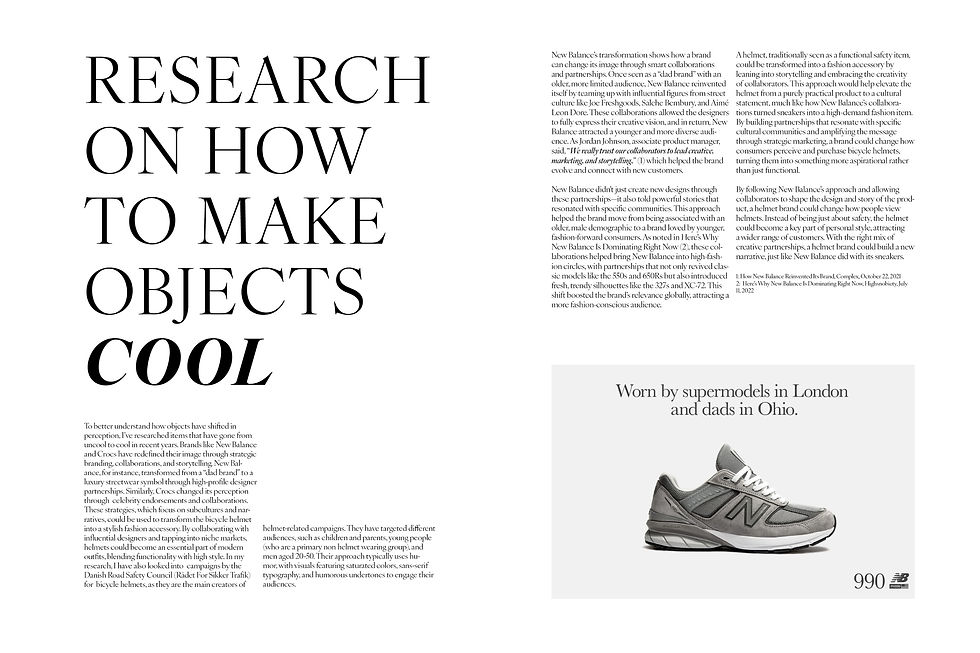
I began Wear a Helmet by asking whether the bicycle helmet's symbolic value could be reframed using the tools of luxury fashion branding rather than safety campaigns. I collected primary data on 80 cyclists at Dronning Louises Bro, mapping their style choices on a matrix of formal-to-outdoor and simple-to-complex dressing, which revealed that helmet use was lowest among the most simply, formally dressed cyclists. In parallel, I researched how brands like New Balance and Crocs shifted from "uncool" to desirable through strategic collaboration and storytelling, and studied how typography shapes emotional perception, mapping high-fashion houses against outdoor brands to understand their typographic differences. I used this to select IvyOra, a typeface aligned with the formal, elegant end of my matrix, targeting the "Formal-Simple" and "Formal-Complex" segments specifically rather than cyclists in general. For the campaign film, I used Michael Valeur's narrative model to create a concept. The final film pairs a voiceover on the helmet's history with styled visuals, and the poster series moved away from an initial data-driven direction toward the same
fashion-referenced typography used throughout, landing on the line
"Wear a Helmet" instead of the originally planned "70%" for clarity.